


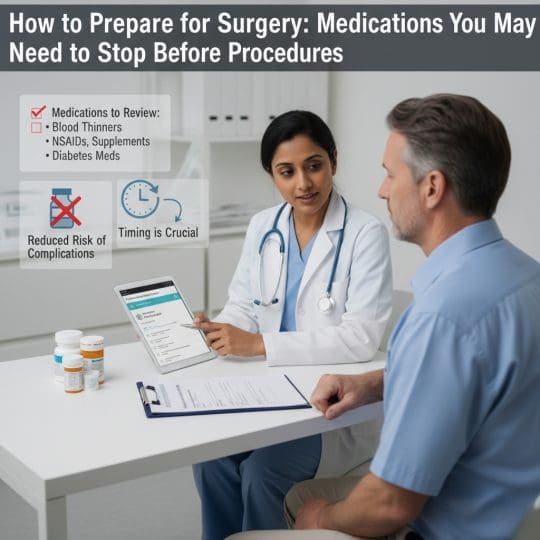
Preparing for surgery involves more than scheduling the procedure. Proper medication management before surgery is essential to reduce the risk of bleeding, complications, and anesthesia-related issues.
Certain prescription medications, over-the-counter drugs, and supplements may need to be adjusted or temporarily stopped prior to surgery.
This guide explains which medications may require special attention and how to prepare safely.
Why Medication Review Before Surgery Is Important
Some medications can:
- Increase bleeding risk
- Interfere with anesthesia
- Affect blood pressure or heart rate
- Impact blood sugar levels
- Delay healing
For these reasons, surgeons and anesthesiologists carefully review a patient’s medication list before any procedure.
Never stop or adjust medications without medical guidance.
Blood Thinners (Anticoagulants and Antiplatelets)
Blood thinners are among the most common medications that may require temporary adjustment before surgery.
Examples include:
- Warfarin
- Apixaban
- Rivaroxaban
- Clopidogrel
- Aspirin
These medications reduce clotting and may increase bleeding during surgery.
Your provider may:
- Temporarily stop the medication
- Adjust timing
- Provide “bridging” therapy if necessary
The timing depends on the medication type and procedure risk level.
Also Read: National Suicide Prevention Month: How Pharmacists Can Help
Nonsteroidal Anti-Inflammatory Drugs (NSAIDs)
NSAIDs can increase bleeding risk and are often stopped before surgery.
Common examples include:
- Ibuprofen
- Naproxen
These are typically discontinued several days before the procedure, depending on your surgeon’s instructions.
Diabetes Medications
Managing blood sugar around the time of surgery requires careful planning.
Medications that may need adjustment include:
- Metformin
- Insulin
- Ozempic
Changes may include:
- Holding certain doses
- Reducing insulin
- Modifying timing
Blood sugar control during surgery is critical to reduce infection risk and promote healing.
Blood Pressure and Heart Medications
Some blood pressure medications may be continued, while others may require adjustment.
Examples include:
- Lisinopril
- Metoprolol
In many cases, beta blockers are continued, but certain ACE inhibitors may be held on the day of surgery. Your surgeon or anesthesiologist will provide specific guidance.
Herbal Supplements and Vitamins
Many patients are unaware that supplements can increase surgical risk.
Common supplements that may need to be stopped include:
- Ginkgo biloba
- Garlic supplements
- Ginseng
- St. John’s Wort
- High-dose Vitamin E
- Fish oil (in high doses)
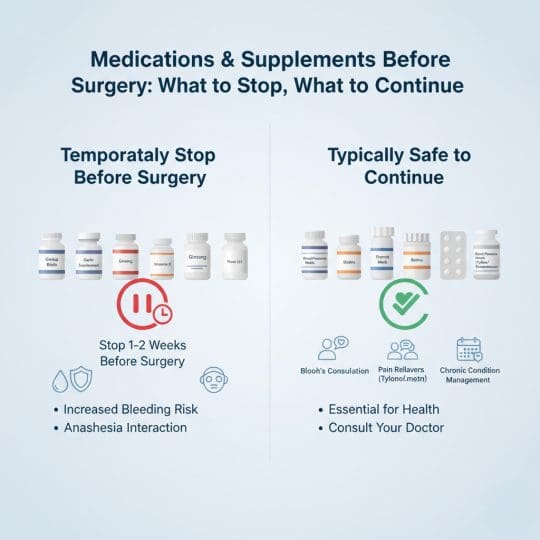
These may increase bleeding risk or interfere with anesthesia.
Supplements are often discontinued 1–2 weeks before surgery.
Hormone Therapy
Certain hormone therapies, including estrogen-containing medications, may increase the risk of blood clots in surgical settings.
Your provider will determine whether temporary discontinuation is appropriate.
Medications Typically Continued
Some medications are usually continued unless specifically instructed otherwise, including:
- Thyroid medications
- Most seizure medications
- Certain antidepressants
- Asthma inhalers
However, always confirm with your surgical team.
Also Read: Healthy Aging Month: Tips for Seniors Staying Active and Healthy
Steps to Take Before Surgery
1. Provide a Complete Medication List
Include:
- Prescription medications
- Over-the-counter products
- Vitamins
- Herbal supplements
- Injections
- Topical medications
Accuracy is essential.
2. Follow Written Instructions Carefully
Your surgical team will provide specific instructions regarding:
- Which medications to stop
- When to stop them
- When to resume them
Do not make changes independently.
3. Ask About Fasting Guidelines
Some medications must be taken with food, while others may be taken with a small sip of water even during fasting.
Confirm instructions in advance.
4. Plan Post-Surgery Medication Restart
After surgery, medications may be restarted at different times depending on:
- Bleeding risk
- Recovery status
- Surgical outcome
Clear discharge instructions will guide you.
When to Contact Your Provider
Contact your surgical team immediately if you:
- Accidentally take a medication you were instructed to stop
- Miss instructions
- Experience unusual symptoms
- Have questions about timing
Prompt communication reduces risk.
The Role of Thriftcare Pharmacy
Pharmacists can assist with pre-surgical medication preparation by:
- Reviewing your full medication list
- Identifying potential interactions
- Clarifying stop dates
- Coordinating with your healthcare provider
- Answering medication timing questions
A thorough medication review helps ensure a safer surgical experience.
Summary
Proper medication management before surgery reduces complications and supports smoother recovery.
Key reminders:
- Never stop medications without medical advice.
- Disclose all prescriptions, OTC products, and supplements.
- Follow surgical instructions carefully.
- Confirm when to restart medications after surgery.
Careful preparation helps ensure a safe procedure and successful recovery.
Medical Disclaimer
This content is for informational purposes only and does not constitute medical advice. Always follow the instructions provided by your surgeon, anesthesiologist, and healthcare provider regarding medication management before surgery.