

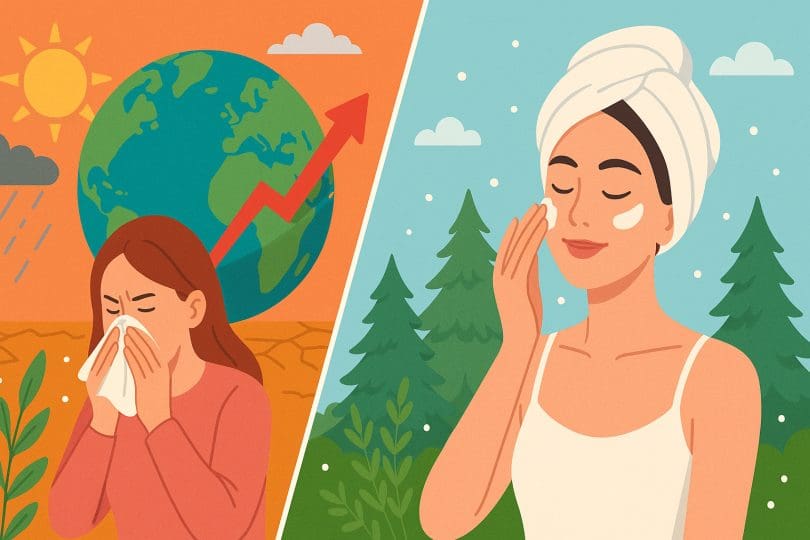
Sea levels are rising and glaciers are melting, but climate change is more than that. It has an impact on the seasons we experience, the air we breathe, and even the condition of our skin. Climate change is one of the main causes of the increased frequency and intensity of allergy seasons that have occurred globally in recent years. Together with pollution and harsh weather, this change in the environment is causing skin allergies and rashes to occur more frequently and with greater severity, which can be uncomfortable and cause even the healthiest skin to deteriorate. Let’s explore the impact of climate change on allergy seasons and how it affects our skin, including using skin allergy medicine, getting a skin allergies test, choosing the right skin allergies ointment or cream, and also tips to manage skin allergies and maintain healthy skin.
Climate Change and Rise Of Allergy Seasons:
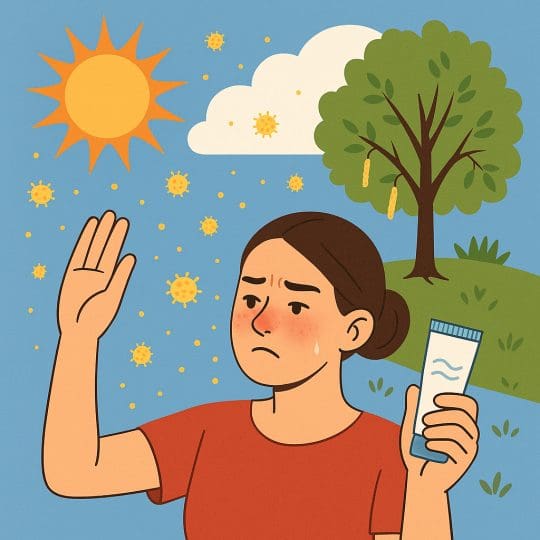
As a result of global warming, many plants that produce pollen that causes allergies are seeing their growing seasons extended. People with seasonal allergies and symptoms of skin allergies are directly affected by this. Allergens like mold and pollen can land on your skin and cause immune system responses that result in skin allergies if they remain in the air for an extended period of time. The length of seasons, weather patterns, and average temperatures are all changing as a result of global warming. For those who suffer from allergies, these changes are especially troubling.
Moreover, pollution is on the rise due to climate change. Pollutants in the air, such as ozone and fine particulate matter, can weaken the Healthy skin barrier, making it easier for allergens and irritants to penetrate. This makes your skin more vulnerable to reactions such as rashes on skin, skin rashes that itch, and general skin irritation.
How Climate Change Affects Your Skin and Develop Skin Allergies:
More people are suffering from skin irritation brought on by allergens as allergy seasons extend. Skin allergy medications or even prescription medications for skin allergy irritation are frequently required as a result of these reactions, which can vary in severity from minor itching to severe inflammation. Another consequence of climate change is air pollution, which adds to the issue. Pollutants such as particulate matter and ozone can either directly irritate the skin or enhance the impact of allergens. The natural barrier of the skin is weakened by these pollutants, which facilitates allergen penetration and the development of skin allergy symptoms. Skin hydration is also Impacted by changes in humidity brought on by climate change. High humidity can lead to sweat which combines with allergens and pollutants to produce skin allergies and trigger pre-existing rashes, while dry air might worsen disorders like eczema.
Recognize Skin Allergy Symptoms:
When the immune system misinterprets a harmless chemical as a threat and responds accordingly, skin allergies arise. Redness, swelling, itching, and even blistering may result from this reaction. Cases of skin allergies and rashes are rising globally as a result of climate change increasing allergen levels. Common causes include, Pollen, Mold spores, Dust mites, Pet dander, Chemical irritants, and Polluted air
Skin allergy symptoms including redness, dryness, and severe itching can be brought on by certain allergens. If left untreated, they may get worse over time and require additional treatments, such as skin allergy cream or itching medication.
It is essential to recognize and understand the symptoms of skin allergies in order to treat them promptly. Common skin allergy symptoms include,
- Redness and itching.
- Hives or swelling.
- Dry and scaly skin.
- Burning sensation.
- Persistent rashes on skin.
It might be time to think about getting a skin allergy test if you have any of the above symptoms while or after spending time outside, especially during allergy seasons. The skin allergy test cost varies according to the type (blood, patch, etc.), but early detection is often worth the money.
Treatments and Remedies:
Skin allergies can be treated in a variety of ways, including prescription and over-the-counter medications. Some of the best choices are as follows:
- Choose the correct products: The proper topical treatments are crucial when treating skin allergies. Check out skin allergy ointment and skin allergy cream that are especially made to restore the skin barrier, reduce inflammation and itching. Popular prescription and over-the-counter treatments include,
- Hydrocortisone creams.
- Antihistamine creams.
- Soothing emollients.
To reduce inflammation and irritation, skin allergy creams typically include hydrocortisone or antihistamines. They are commonly available at pharmacies and are perfect for mild to moderate symptoms.
Skin allergy ointments offer a thicker, more protective barrier for more severe situations. These work especially well at night since they allow the skin to heal itself while you sleep. Look for ointments with ingredients like petroleum jelly, zinc oxide, or hydrocortisone.
Particularly during allergy season when your skin is more sensitive, pick an allergy cream that is suitable for your skin type and free of harsh chemicals and additional fragrances.
- Skin Allergy Medicine: There are other prescription and over-the-counter skin allergy medicine options available in addition to Telfast. Oral antihistamines, corticosteroids, and immunosuppressant’s are among them. The best course of treatment can be determined with the assistance of a dermatologist, particularly if you are experiencing persistent or recurring symptoms of a skin allergy during the allergy season. To reduce the symptoms of skin allergies like hives or itching, oral antihistamines such as cetirizine and loratadine are frequently used to lower the production of histamine in the body. Prescription-strength antihistamines or topical anesthetics are examples of medicine for skin allergy itching, that may be required for people who have severe itching.
- Telfast for Skin Allergy: A popular non-drowsy antihistamine, Telfast (also called Fexofenadine) is used to treat a number of allergic diseases, such as skin allergies, skin rashes, and skin irritation caused by allergens or environmental triggers. It efficiently reduces itching and other symptoms of skin allergies without interfering with your everyday activities.
Telfast functions by preventing the effects of histamine, a substance that your immune system releases in response to allergens. The following are the symptoms of Histamine,
- Skin rashes that itch
- Skin rashes
- Skin allergies and rashes due to pollen, dust mites, or pet dander.
- Skin allergy symptoms like redness, swelling, and itchiness.
Telfast provides immediate and long-lasting relief from itching, inflammation, and skin irritation by blocking histamine. Telfast can be used for skin allergies if you experience skin rashes or persistent hives; Allergic responses to allergens in the environment, food, or clothing; and Itchy, persistent skin rashes on skin that are not explained.
Tips to Protect your Healthy Skin During Allergy Season:
Taking care of your surroundings and skincare routine is equally as crucial as taking medicine. The following proactive tips will help you to maintain healthy skin:
- Moisturize regularly with hypoallergenic lotions to maintain the skin barrier.
- Take a shower after being outside, which helps to get rid of pollutants and pollen causing skin allergies.
- Use air purifiers to reduce exposure to airborne allergens.
- Avoid scratching to reduce skin rashes that itch.
- Use hypoallergenic products (from detergents to skin care products) to free from allergens and reduce flare-ups.
- Stay indoors at high pollen days.
- Maintain your surroundings allergen-free.
- Stay hydrated.
- Maintain a healthy diet (try to take foods rich in omega-3 fatty acids and antioxidants) for healthy skin.
- Use cold compresses to reduce flare-ups and minimize swelling.
- Use natural products like coconut oil and Aloe Vera gel, which has anti-inflammatory properties to reduce redness and provide relief from skin irritation.
- Monitor your skin allergy symptoms to identify what triggers your allergies.
When to Visit a doctor:
Skin-related problems are expected to increase in frequency and severity as climate change continues. It is essential to understand how the environment affects our health. The health of your skin can be greatly preserved by taking proactive steps like utilizing Telfast for skin allergies, picking the best medication for skin allergy irritation, and applying relaxing skin allergy cream.
If your condition doesn’t improve with over-the-counter medications, consult a professional dermatologist. To identify particular triggers, they could suggest a thorough allergy test. The skin allergy test cost might vary, but many insurance plans provide coverage or savings. Check with your provider to see if your insurance will cover the skin allergy test cost. More importantly, a doctor can assist in developing a customized treatment plan that might involve environmental adjustments, lifestyle adjustments, and prescription skin allergy medicine.
Conclusion:
Climate change is more than just a global issue—it’s a personal one, affecting how our bodies react to the world around us. The risks to our skin health increase with the duration and severity of allergy seasons. Your healthy skin may be at risk from rashes and skin allergies to persistent skin irritation. Fortunately, you may successfully protect your skin and control skin allergy symptoms if you have the proper awareness, get tested, and receive treatments, such as Telfast for skin allergies, skin allergies cream, or skin allergies ointment. To find the best skin allergy itching medicine for you, don’t hesitate to spend money on a skin allergy test and seek advice from professionals.